Working fact sheet · 3 sections need source detail
Drawn from the existing guide record (app screenshot). Regional tags are library coverage, not a prediction of sightings. Blank fields remain open for research; imported notes have not been independently re-verified.
Colored points show georeferenced records shared through GBIF. Records can be historical and unevenly sampled; gaps do not establish absence. This is a record map, not a complete range or a guarantee of sightings.
Habitat & range notes
Antarctic Peninsula
Drake Passage
In the Southern Hemisphere, they filter feed mainly during austral summer in Antarctic and subantarctic waters
No phone capture action is currently queued for this animal.
App photo target
/wildlife-photos/humpback-whale.jpg
Source target
/interp/source/humpback-whale-info.jpg
Animal information
Field marks and guide-facing detail.
Field Marks
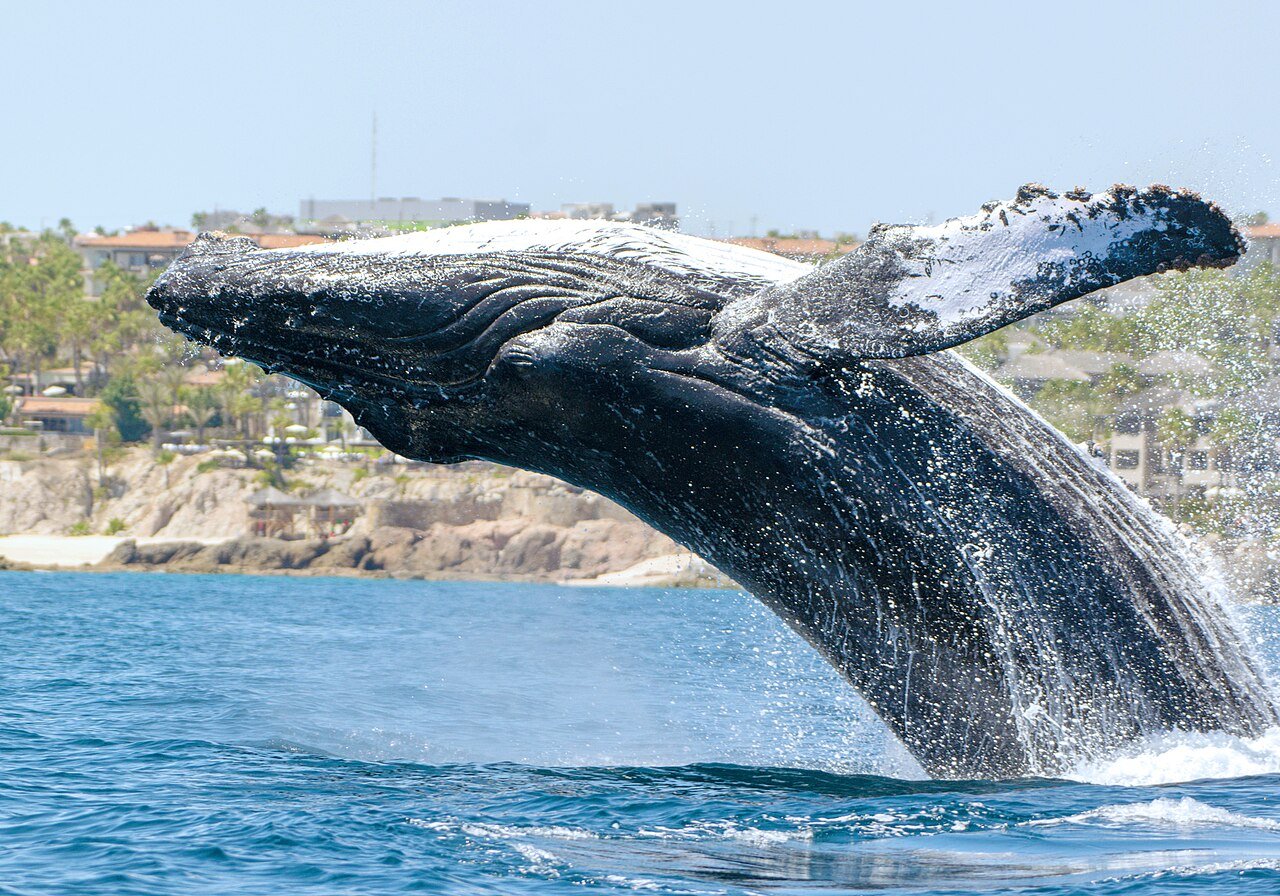
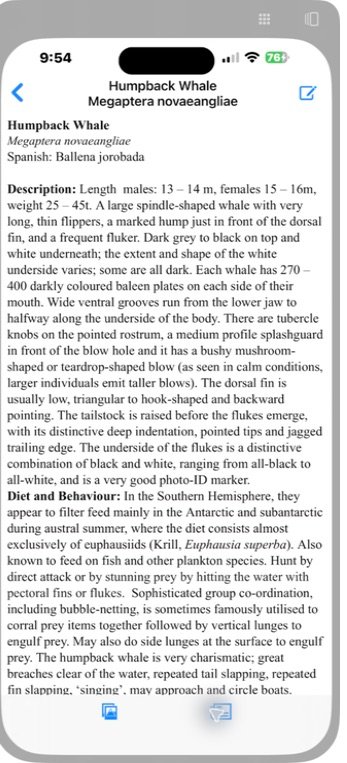
Very long thin flippers and marked hump before the dorsal fin
Dark grey to black above and white below
Knobs on the rostrum and splashguard in front of the blowhole
Raised flukes with distinctive black-and-white underside patterns useful for photo ID
Guide Facts
App detail notes males are about 13-14 m and females 15-16 m
In the Southern Hemisphere, they filter feed mainly during austral summer in Antarctic and subantarctic waters
Diet consists almost exclusively of euphausiids/krill, though fish and other plankton species are also taken
Complex feeding behavior can include bubble-netting, lunges, pectoral fin use, and coordinated group feeding
Measurements
Measurement detail not captured in current structured notes
Diet
In the Southern Hemisphere, they filter feed mainly during austral summer in Antarctic and subantarctic watersDiet consists almost exclusively of euphausiids/krill, though fish and other plankton species are also takenComplex feeding behavior can include bubble-netting, lunges, pectoral fin use, and coordinated group feeding
Behavior
App detail notes males are about 13-14 m and females 15-16 m
Breeding
Breeding detail not captured in current structured notes
Range
Antarctic PeninsulaDrake PassageIn the Southern Hemisphere, they filter feed mainly during austral summer in Antarctic and subantarctic waters
Comparison Notes
Very long thin flippers and marked hump before the dorsal finRaised flukes with distinctive black-and-white underside patterns useful for photo IDComplex feeding behavior can include bubble-netting, lunges, pectoral fin use, and coordinated group feeding
Conservation
Captured from app screenshot evidence; conservation status needs exact app-field confirmation if required.
Keratin plates used by baleen whales to filter krill and small schooling prey from seawater.26 animal matches / 26 captured / 0 pending / 1 location filesGuide draft readyOpen Glossary term
Animal ID
drafted-from-current-records
Krill
Small shrimp-like crustaceans that are a major Antarctic food source for many whales, penguins, seals, and seabirds.27 animal matches / 27 captured / 0 pending / 1 location filesGuide draft readyOpen Glossary term
Animal ID
drafted-from-current-records
Pelagic
Living or feeding in open ocean waters away from land.32 animal matches / 23 captured / 9 pending / 4 location filesGuide draft readyOpen Glossary term
Animal ID
drafted-from-current-records
Pinniped
A fin-footed marine mammal group that includes seals, fur seals, and sea lions.24 animal matches / 21 captured / 3 pending / 5 location filesGuide draft readyOpen Glossary term