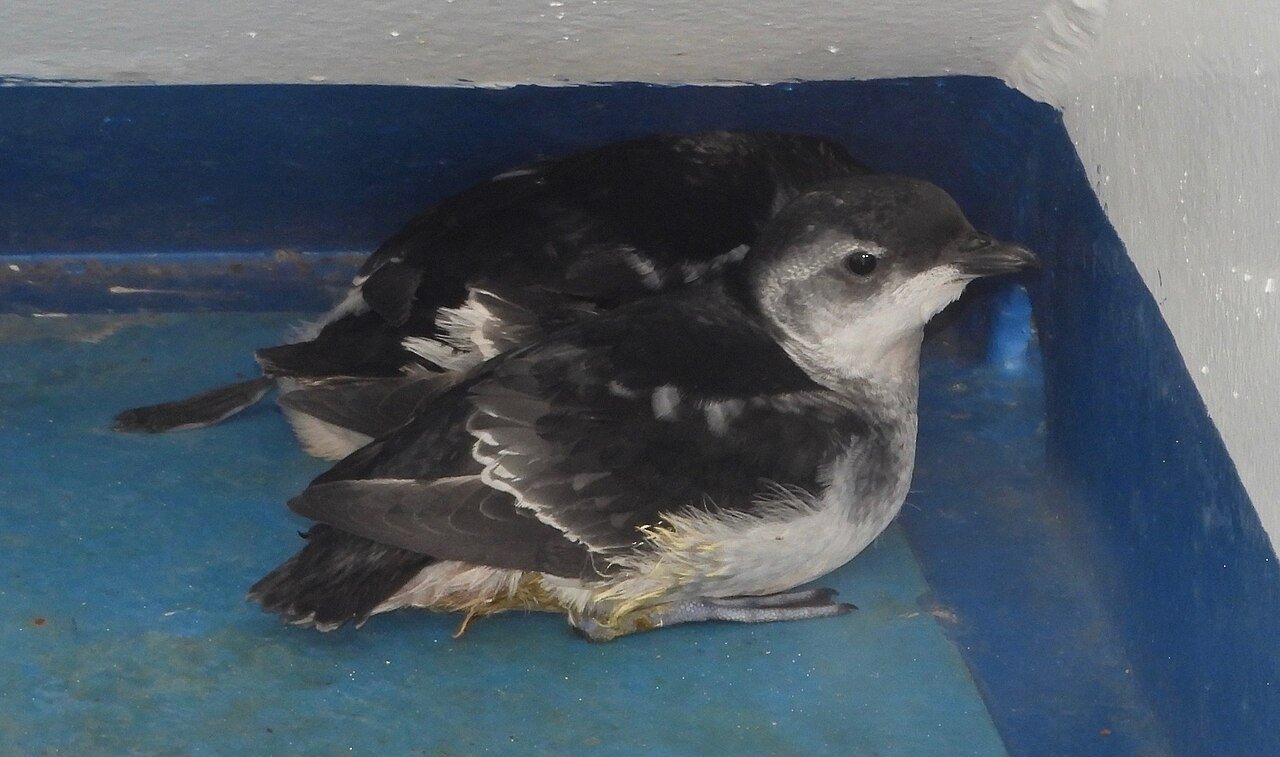
A stout little diving petrel with short broad wings, dark upperparts, pale underparts, white half-neck collar, and rapid straight flight low over the water.
Working fact sheet · 1 sections need source detail
Drawn from the existing guide record (app screenshot). Regional tags are library coverage, not a prediction of sightings. Blank fields remain open for research; imported notes have not been independently re-verified.
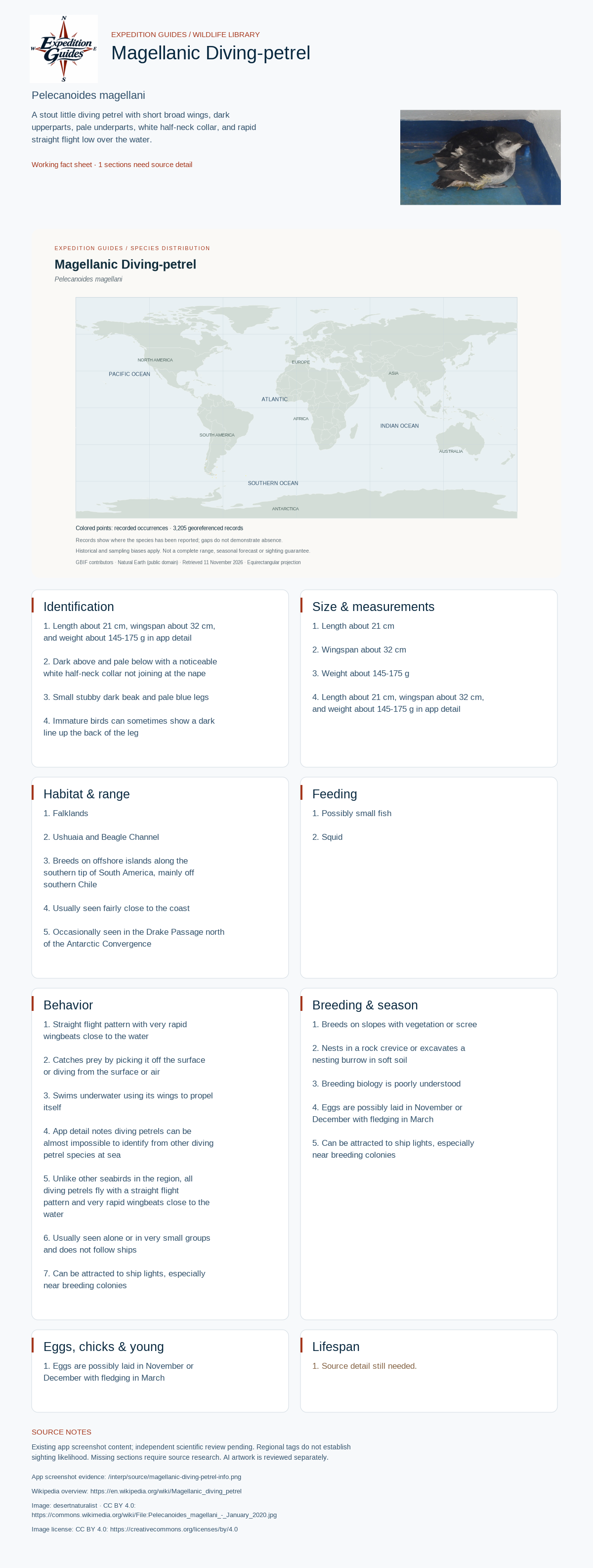
Colored points show georeferenced records shared through GBIF. Records can be historical and unevenly sampled; gaps do not establish absence. This is a record map, not a complete range or a guarantee of sightings.
Habitat & range notes
Breeds on offshore islands along the southern tip of South America, mainly off southern Chile
Usually seen fairly close to the coast
Occasionally seen in the Drake Passage north of the Antarctic Convergence
No phone capture action is currently queued for this animal.
App photo target
/wildlife-photos/magellanic-diving-petrel.jpg
Source target
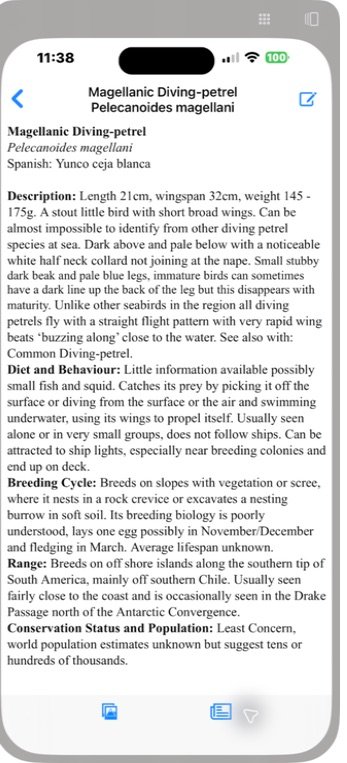
/interp/source/magellanic-diving-petrel-info.png
Animal information
Field marks and guide-facing detail.
Field Marks
Length about 21 cm, wingspan about 32 cm, and weight about 145-175 g in app detail
Dark above and pale below with a noticeable white half-neck collar not joining at the nape
Small stubby dark beak and pale blue legs
Immature birds can sometimes show a dark line up the back of the leg
Guide Facts
App detail notes diving petrels can be almost impossible to identify from other diving petrel species at sea
Unlike other seabirds in the region, all diving petrels fly with a straight flight pattern and very rapid wingbeats close to the water
Usually seen alone or in very small groups and does not follow ships
Can be attracted to ship lights, especially near breeding colonies
Measurements
Length about 21 cmWingspan about 32 cmWeight about 145-175 g
Diet
Possibly small fishSquid
Behavior
Straight flight pattern with very rapid wingbeats close to the waterCatches prey by picking it off the surface or diving from the surface or airSwims underwater using its wings to propel itselfUsually alone or in very small groups
Breeding
Breeds on slopes with vegetation or screeNests in a rock crevice or excavates a nesting burrow in soft soilBreeding biology is poorly understoodEggs are possibly laid in November or December with fledging in March
Range
Breeds on offshore islands along the southern tip of South America, mainly off southern ChileUsually seen fairly close to the coastOccasionally seen in the Drake Passage north of the Antarctic Convergence
Comparison Notes
App detail points guides to compare with Common Diving-petrel
Conservation
Least Concern, with app detail noting unknown world population but likely tens or hundreds of thousands
Keratin plates used by baleen whales to filter krill and small schooling prey from seawater.26 animal matches / 26 captured / 0 pending / 1 location filesGuide draft readyOpen Glossary term
Animal ID
drafted-from-current-records
Krill
Small shrimp-like crustaceans that are a major Antarctic food source for many whales, penguins, seals, and seabirds.27 animal matches / 27 captured / 0 pending / 1 location filesGuide draft readyOpen Glossary term
Animal ID
drafted-from-current-records
Pelagic
Living or feeding in open ocean waters away from land.32 animal matches / 23 captured / 9 pending / 4 location filesGuide draft readyOpen Glossary term
Animal ID
drafted-from-current-records
Pinniped
A fin-footed marine mammal group that includes seals, fur seals, and sea lions.24 animal matches / 21 captured / 3 pending / 5 location filesGuide draft readyOpen Glossary term