Working fact sheet · 1 sections need source detail
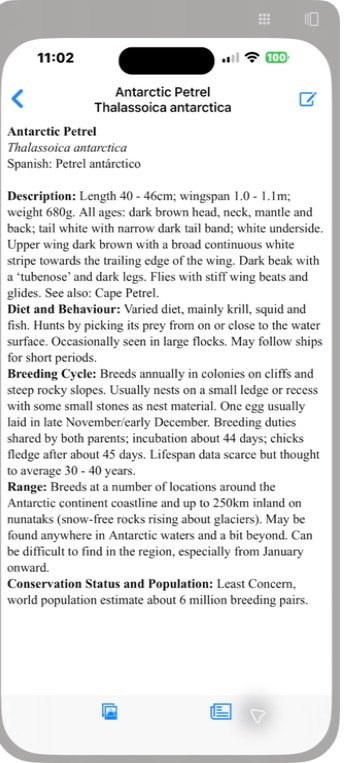
Drawn from the existing guide record (app screenshot). Regional tags are library coverage, not a prediction of sightings. Blank fields remain open for research; imported notes have not been independently re-verified.
Colored points show georeferenced records shared through GBIF. Records can be historical and unevenly sampled; gaps do not establish absence. This is a record map, not a complete range or a guarantee of sightings.
Habitat & range notes
Breeds around the Antarctic continent coastline and up to about 250 km inland on nunataks
Can be found throughout the Antarctic waters and a bit beyond
No phone capture action is currently queued for this animal.
App photo target
/wildlife-photos/antarctic-petrel.jpg
Source target
/interp/source/antarctic-petrel-info.png
Animal information
Field marks and guide-facing detail.
Field Marks
Length about 40-46 cm, wingspan about 1.0-1.1 m, and weight about 680 g in app detail
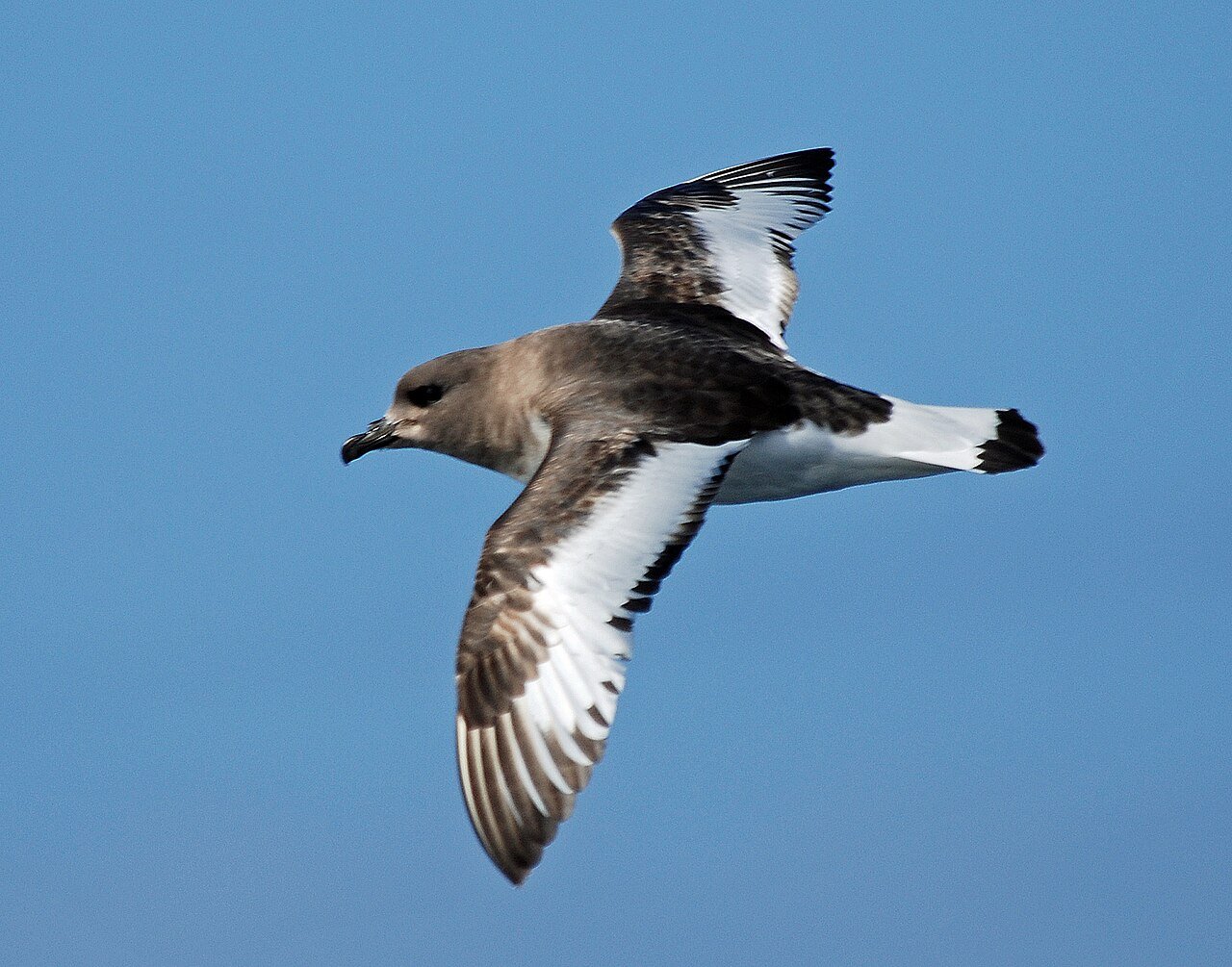
Dark brown head, neck, mantle, and back with white underside
White tail with a narrow dark tail band
Upperwing dark brown with a broad white stripe toward the trailing edge
Guide Facts
App detail notes a varied diet, mainly krill, squid, and fish
Feeds by picking prey from or near the water surface and occasionally follows ships
Breeds annually in colonies on cliffs and steep rocky slopes
May be difficult to find in the region, especially from January onward
Measurements
Length about 40-46 cmWingspan about 1.0-1.1 mWeight about 680 g
Diet
Varied dietMainly krill, squid, and fish
Behavior
Picks prey from or close to the water surfaceOccasionally seen in large flocksMay follow ships for short periods
Breeding
Breeds annually in cliff and steep rocky-slope coloniesUsually nests on a small ledge or recess with some small stones as nest materialOne egg is usually laid in late November or early December
Range
Breeds around the Antarctic continent coastline and up to about 250 km inland on nunataksCan be found throughout the Antarctic waters and a bit beyond
Comparison Notes
App detail points guides to compare with Cape Petrel
Conservation
Least Concern, with app detail estimating about 6 million breeding pairs
Keratin plates used by baleen whales to filter krill and small schooling prey from seawater.26 animal matches / 26 captured / 0 pending / 1 location filesGuide draft readyOpen Glossary term
Animal ID
drafted-from-current-records
Krill
Small shrimp-like crustaceans that are a major Antarctic food source for many whales, penguins, seals, and seabirds.27 animal matches / 27 captured / 0 pending / 1 location filesGuide draft readyOpen Glossary term
Animal ID
drafted-from-current-records
Pelagic
Living or feeding in open ocean waters away from land.32 animal matches / 23 captured / 9 pending / 4 location filesGuide draft readyOpen Glossary term
Animal ID
drafted-from-current-records
Pinniped
A fin-footed marine mammal group that includes seals, fur seals, and sea lions.24 animal matches / 21 captured / 3 pending / 5 location filesGuide draft readyOpen Glossary term