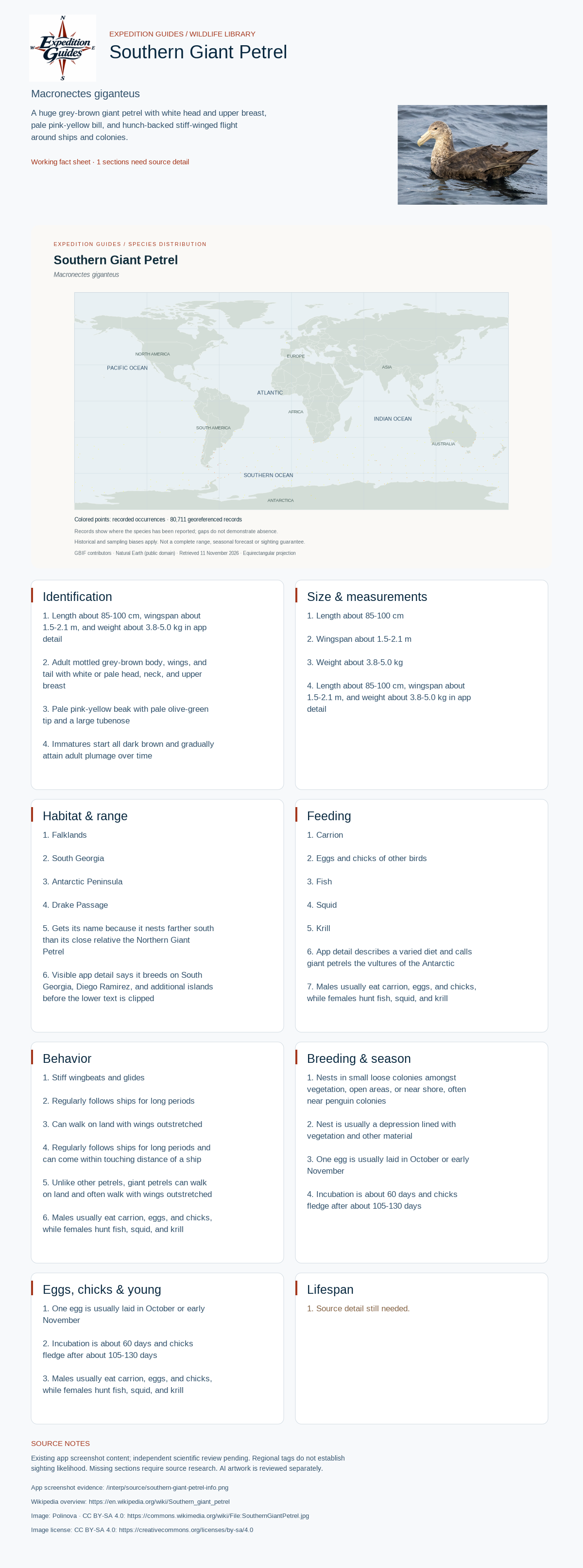
A huge grey-brown giant petrel with white head and upper breast, pale pink-yellow bill, and hunch-backed stiff-winged flight around ships and colonies.
Working fact sheet · 1 sections need source detail
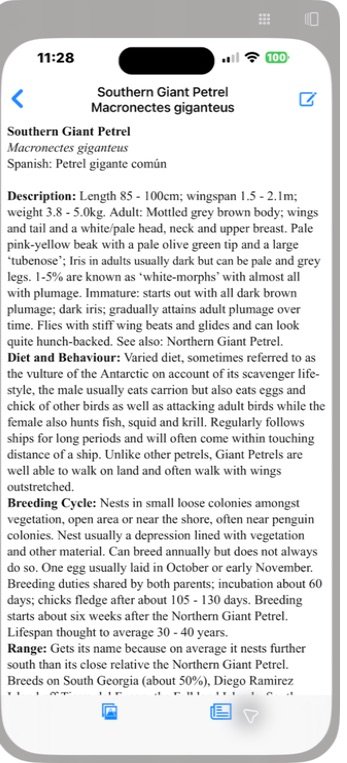
Drawn from the existing guide record (app screenshot). Regional tags are library coverage, not a prediction of sightings. Blank fields remain open for research; imported notes have not been independently re-verified.
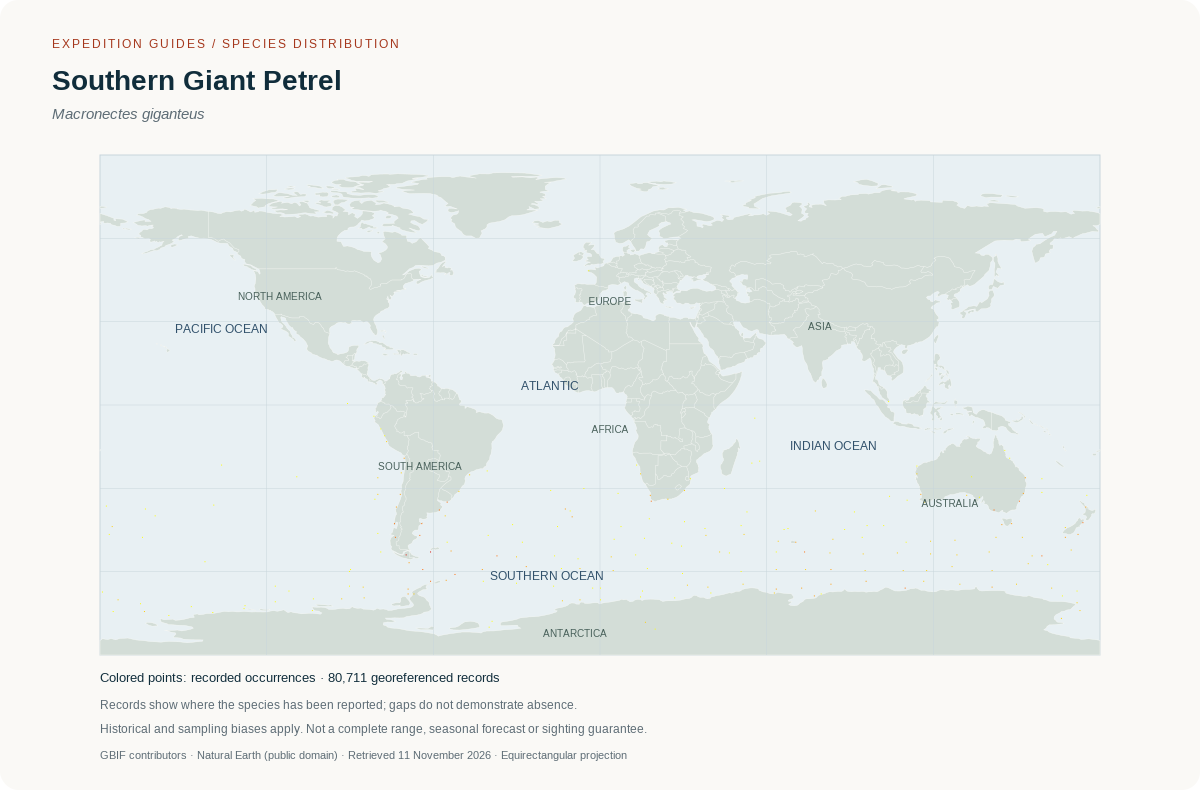
Colored points show georeferenced records shared through GBIF. Records can be historical and unevenly sampled; gaps do not establish absence. This is a record map, not a complete range or a guarantee of sightings.
Habitat & range notes
Gets its name because it nests farther south than its close relative the Northern Giant Petrel
Visible app detail says it breeds on South Georgia, Diego Ramirez, and additional islands before the lower text is clipped
No phone capture action is currently queued for this animal.
App photo target
/wildlife-photos/southern-giant-petrel.jpg
Source target
/interp/source/southern-giant-petrel-info.png
Animal information
Field marks and guide-facing detail.
Field Marks
Length about 85-100 cm, wingspan about 1.5-2.1 m, and weight about 3.8-5.0 kg in app detail
Adult mottled grey-brown body, wings, and tail with white or pale head, neck, and upper breast
Pale pink-yellow beak with pale olive-green tip and a large tubenose
Immatures start all dark brown and gradually attain adult plumage over time
Guide Facts
App detail describes a varied diet and calls giant petrels the vultures of the Antarctic
Regularly follows ships for long periods and can come within touching distance of a ship
Unlike other petrels, giant petrels can walk on land and often walk with wings outstretched
Males usually eat carrion, eggs, and chicks, while females hunt fish, squid, and krill
Measurements
Length about 85-100 cmWingspan about 1.5-2.1 mWeight about 3.8-5.0 kg
Diet
CarrionEggs and chicks of other birdsFishSquidKrill
Behavior
Stiff wingbeats and glidesCan look quite hunch-backedRegularly follows ships for long periodsCan walk on land with wings outstretched
Breeding
Nests in small loose colonies amongst vegetation, open areas, or near shore, often near penguin coloniesNest is usually a depression lined with vegetation and other materialOne egg is usually laid in October or early NovemberIncubation is about 60 days and chicks fledge after about 105-130 days
Range
Gets its name because it nests farther south than its close relative the Northern Giant PetrelVisible app detail says it breeds on South Georgia, Diego Ramirez, and additional islands before the lower text is clipped
Comparison Notes
App detail points guides to compare with Northern Giant Petrel
Conservation
Visible app detail was clipped before the full conservation-status section; needs continuation capture if the app exposes lower text later
Keratin plates used by baleen whales to filter krill and small schooling prey from seawater.26 animal matches / 26 captured / 0 pending / 1 location filesGuide draft readyOpen Glossary term
Animal ID
drafted-from-current-records
Krill
Small shrimp-like crustaceans that are a major Antarctic food source for many whales, penguins, seals, and seabirds.27 animal matches / 27 captured / 0 pending / 1 location filesGuide draft readyOpen Glossary term
Animal ID
drafted-from-current-records
Pelagic
Living or feeding in open ocean waters away from land.32 animal matches / 23 captured / 9 pending / 4 location filesGuide draft readyOpen Glossary term
Animal ID
drafted-from-current-records
Pinniped
A fin-footed marine mammal group that includes seals, fur seals, and sea lions.24 animal matches / 21 captured / 3 pending / 5 location filesGuide draft readyOpen Glossary term